Recently, the Ministry of Energy in Hungary officially released the Household Energy Storage Program Call (OETP 2026), document number 2026/OETP/01. This landmark policy has quickly captured widespread attention across the European energy sector. Its importance lies not only in the substantial funding allocation of HUF 100 billion (approximately €260 million), but also in the clearly defined and highly targeted technical requirements embedded within the program. Together, these elements establish a structured and stringent market entry framework, shaping the direction for residential energy storage products seeking to participate in Hungary’s rapidly evolving energy landscape.
To fully understand the impact of this subsidy program, it is essential to examine its underlying policy logic. Unlike broad-based incentive schemes, OETP 2026 is designed with a precise objective: enhancing household energy independence. In particular, it targets users who have been excluded from traditional annual grid settlement mechanisms, encouraging them to transition toward self-sufficient energy systems.
The policy places clear emphasis on self-consumption rather than grid export, signaling a strategic shift toward decentralized energy usage. Within this framework, the financial incentives are highly attractive. Eligible projects can receive up to 100% cost coverage, with a maximum subsidy of HUF 2.5 million (approximately €6,500) per household. This support covers not only energy storage equipment, but also installation costs and necessary infrastructure upgrades, such as meter box modifications.
As a result, the program significantly lowers the barrier to entry for residential users, accelerating the adoption of energy storage systems while reinforcing the broader transition toward distributed clean energy solutions.
While the financial incentives are compelling, the real threshold lies within the technical specifications outlined in the Technical and Professional Expectations section of the document. This section plays a decisive role in determining whether existing products, solutions, or inventories are eligible for participation.
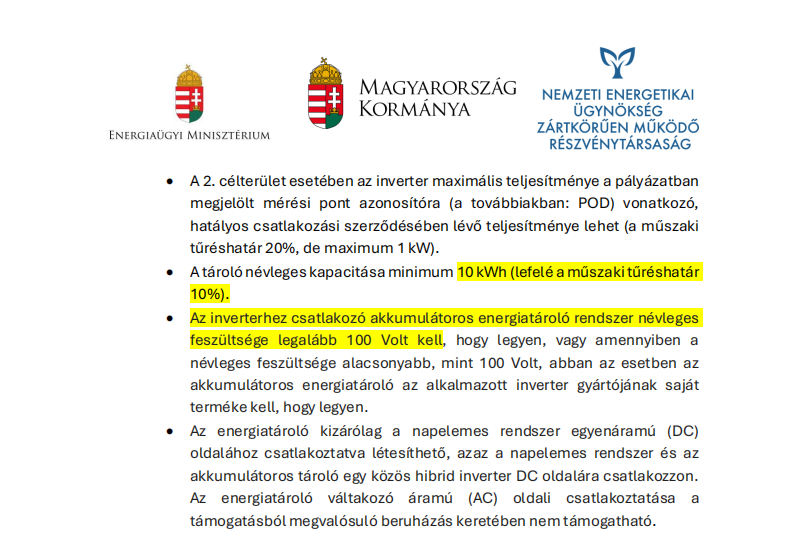
One of the most critical requirements is the minimum system capacity. The policy clearly mandates that the nominal capacity of any eligible energy storage system must be no less than 10 kWh. This requirement fundamentally reshapes the market landscape by eliminating smaller, entry-level configurations that previously started at 5 kWh with modular expansion options.
For inverter manufacturers, this means system configurations must be redesigned to include at least two to three battery modules as a standard offering, depending on individual module capacity. For distributors, the implications are equally significant: existing inventories of low-capacity products may no longer meet market demand, requiring rapid portfolio adjustments to remain competitive.
The policy also introduces explicit voltage requirements, further narrowing the range of eligible solutions.
Minimum Voltage Requirement: Battery systems must have a nominal voltage of ≥100V, effectively positioning high-voltage systems as the mainstream solution.
Low-Voltage Exception: Systems below 100V are only permitted if the battery is manufactured by the same company as the inverter, enforcing a tightly integrated product ecosystem.
This distinction carries important implications. High-voltage systems offer greater flexibility and compatibility across different inverter platforms, making them a more scalable and versatile choice. In contrast, low-voltage systems are restricted to same-brand configurations, limiting integration options and reducing adaptability in multi-brand environments.
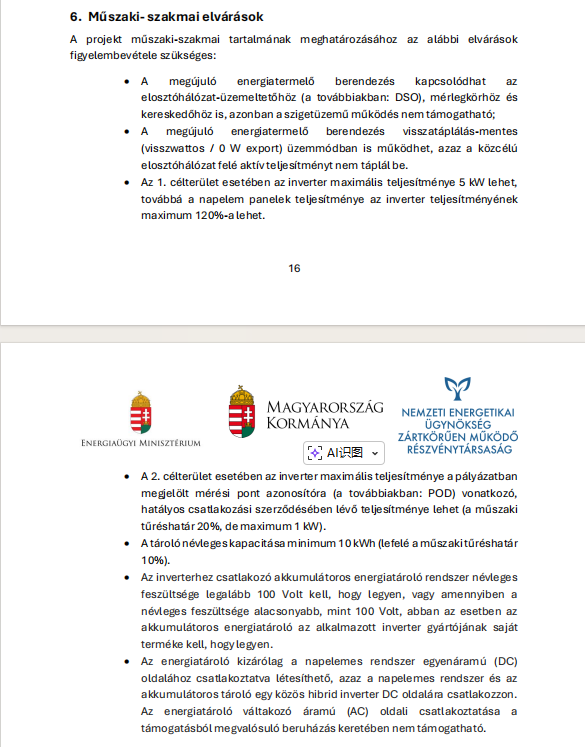
Another defining requirement of the policy is the mandated system architecture. The document explicitly states that energy storage systems must be connected on the DC side of the photovoltaic system, thereby excluding AC-coupled configurations.
This effectively standardizes the technical pathway for all eligible projects, favoring DC-coupled hybrid systems. These systems offer higher efficiency by minimizing conversion losses and enabling direct integration between photovoltaic generation and storage. However, they also require more advanced system design, precise installation practices, and stronger integration capabilities from solution providers.
Beyond hardware specifications, the policy places strong emphasis on system-level performance, integration capabilities, and ecosystem readiness. This reflects a shift from component-based evaluation to comprehensive solution assessment.
All energy storage systems must support stable anti-backflow (zero export) functionality. This ensures that excess electricity is not fed back into the grid, aligning with the policy’s focus on self-consumption.
Achieving this requires:
Highly responsive inverter control algorithms
Accurate and reliable smart meter integration
Seamless coordination between system components
Failure to meet these criteria may result in non-compliance, regardless of hardware performance.
The policy also introduces strict requirements for project execution. Only officially registered and approved installers are authorized to implement subsidized projects, adding a new layer of complexity for manufacturers and solution providers.
To successfully participate:
Manufacturers must actively support installers in obtaining official registration
Inverters must be included in Distribution System Operator (DSO) approved equipment lists
Close collaboration across the value chain becomes essential
This means that simply supplying products is no longer sufficient. Companies must engage deeply with local ecosystems to ensure successful project delivery and subsidy approval.
Application Start Date: February 2, 2026
Project Completion Deadline: Within 24 months after approval
While the policy framework is now clearly defined, execution will be the decisive factor in determining market success. Considering current inventory levels across Hungary and neighboring regions, as well as logistics timelines and supply chain constraints, companies with localized European warehousing and the ability to deliver fully integrated systems above 10 kWh will hold a significant competitive advantage.
Ultimately, speed, flexibility, and readiness will distinguish market leaders in this new policy environment.
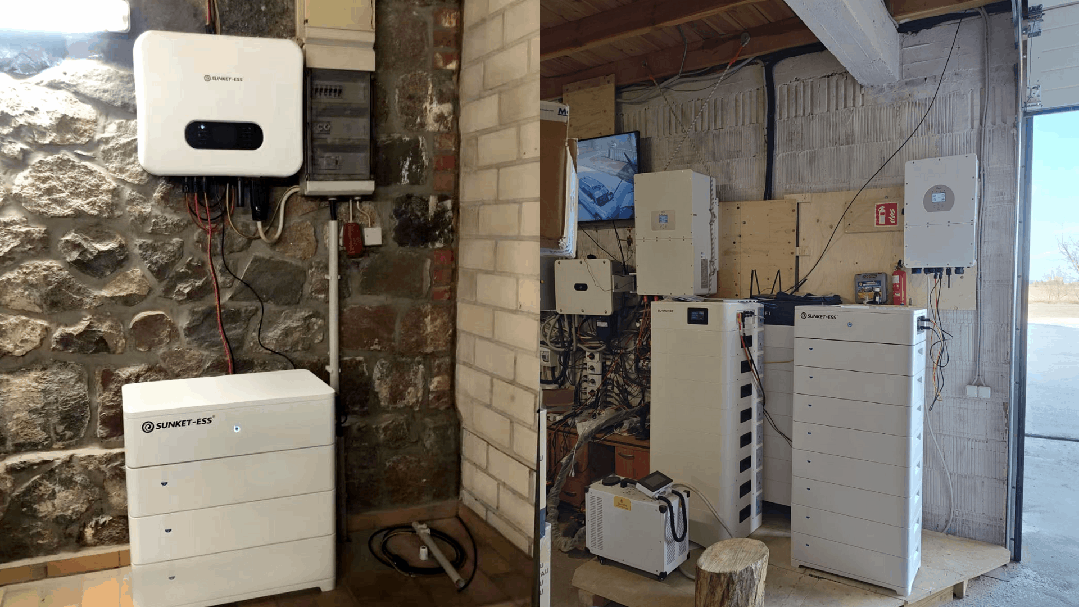
As a leading provider of integrated solar and energy storage solutions, Sunket is fully prepared to meet the demands of the OETP 2026 program. Its portfolio of high-voltage energy storage systems is already aligned with the policy’s technical requirements and ready for immediate deployment in the Hungarian market.
Sunket’s solutions include:
High-voltage rack-mounted systems starting from 15 kWh
High-voltage stacked systems starting from 12 kWh
High-capacity rack systems from 48 kWh and above
All systems are based on DC-coupled hybrid architectures, ensuring full compliance with requirements related to capacity, voltage, and system configuration. Supported by strong system integration expertise and efficient delivery capabilities, Sunket is well-positioned to enable rapid project deployment and help customers seamlessly access subsidy benefits.
With clear policy direction, strong financial incentives, and rising demand for energy independence, Hungary’s residential energy storage market is entering a new phase of accelerated growth. In this evolving landscape, Sunket stands ready to deliver compliant, reliable, and future-ready solutions—empowering partners and customers to seize emerging opportunities.
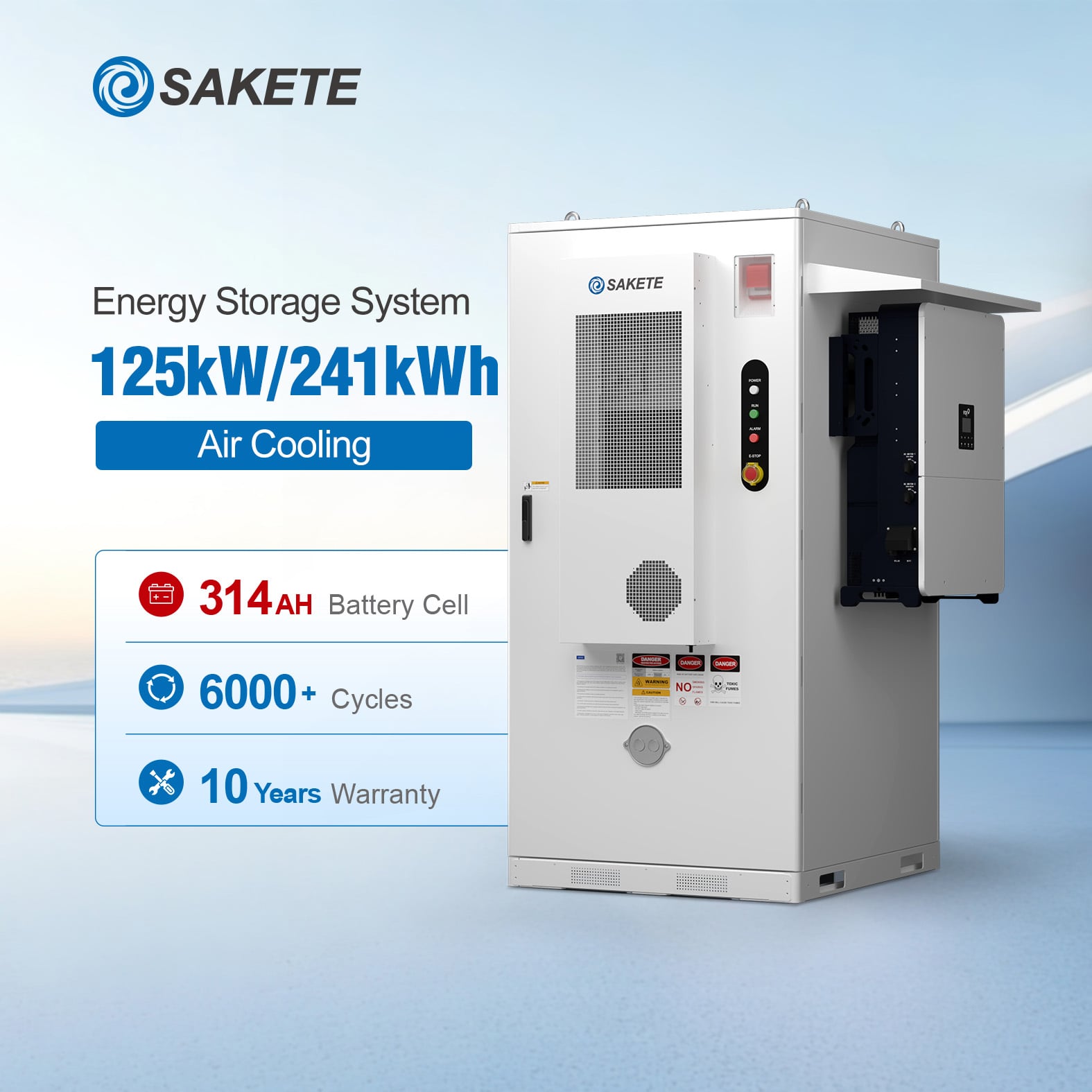
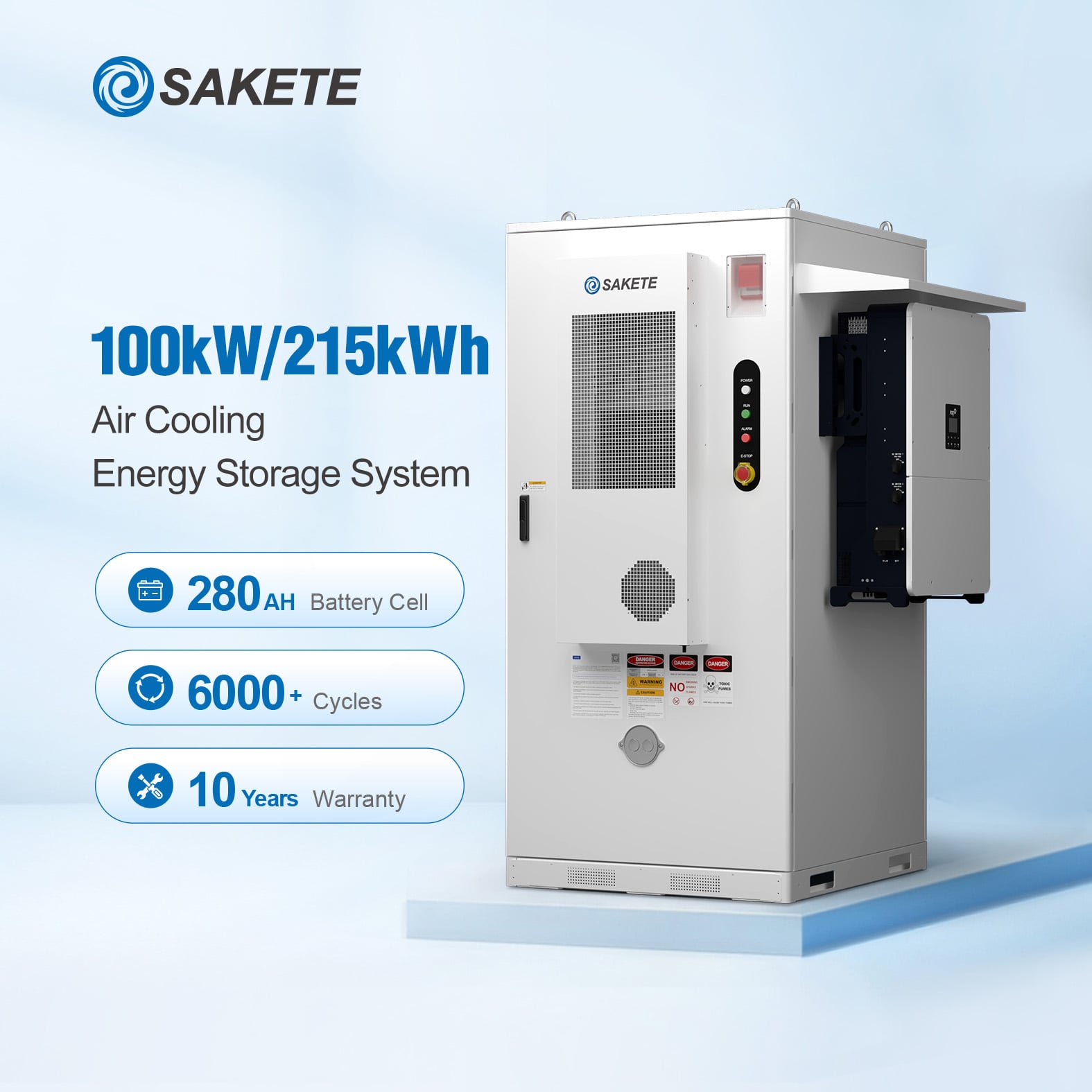
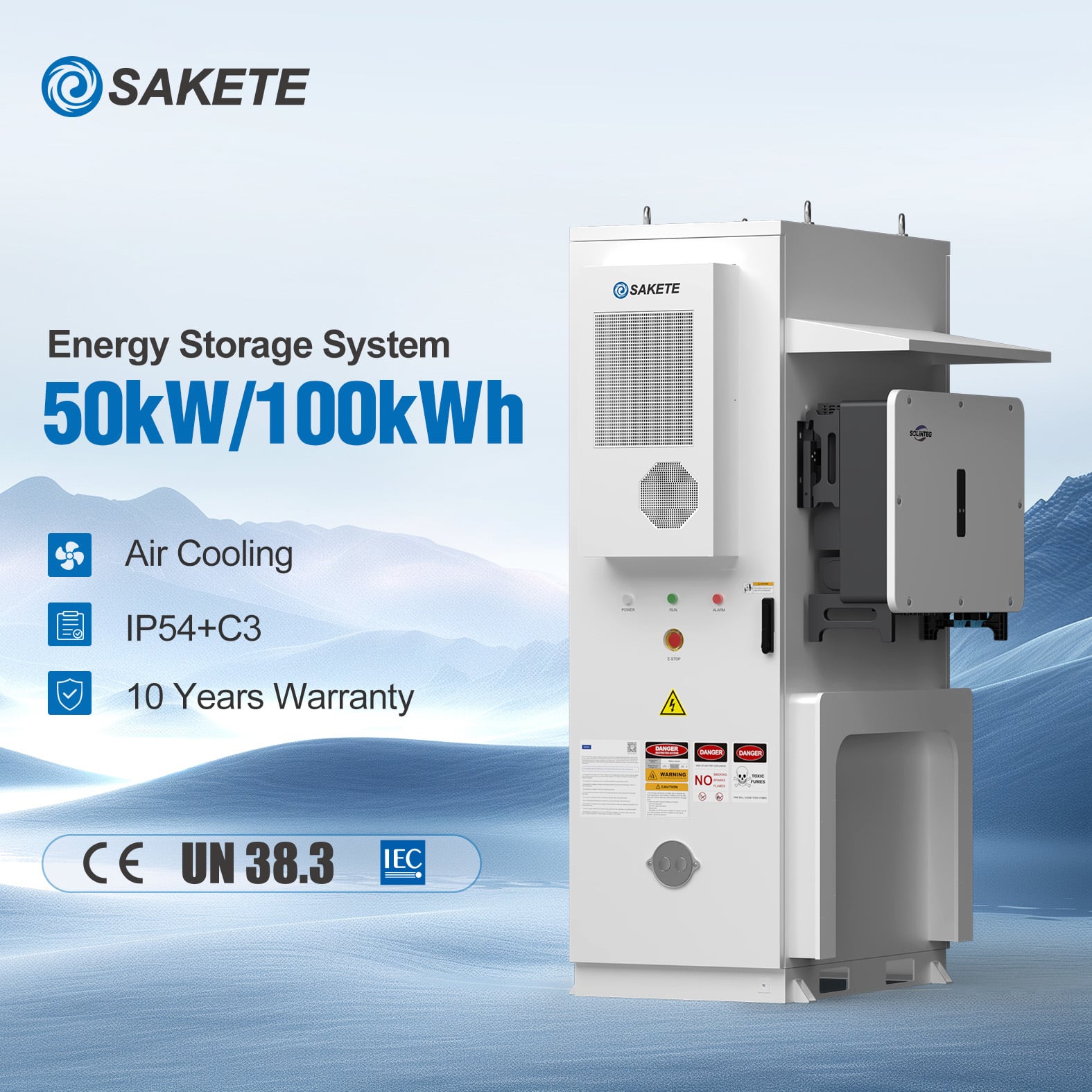
High-performance energy storage systems engineered for diverse commercial and industrial applications.