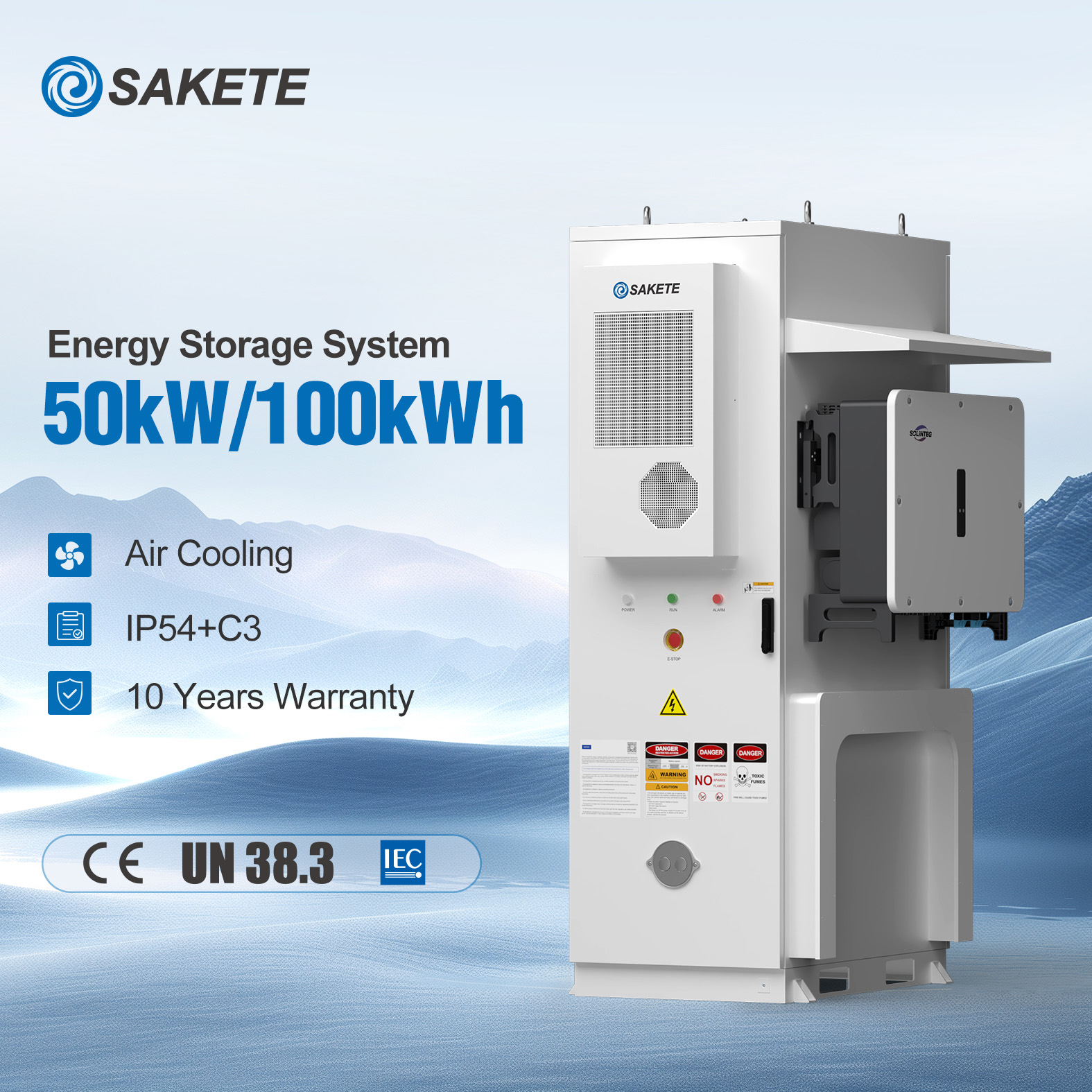
50kW Inverter and Cabinet Battery Compatibility: A Complete Sizing & Integration Guide
Introduction: Why Compatibility Matters for 50kW Inverter Systems
Integrating a 50kW inverter with a cabinet battery is not a plug-and-play task. Unlike small residential setups, high-power commercial systems require precise matching of voltage, power, communication, and safety parameters. A mismatch can trigger fault codes, derating, sudden shutdowns, or even accelerated battery aging—costing thousands in downtime and replacement.
This guide covers the five critical compatibility dimensions every installer, engineer, and procurement specialist must verify before connecting a 50kW inverter to a cabinet battery. Whether you are designing a commercial solar storage system, a microgrid, or a backup power solution, these principles ensure stable, efficient, and safe operation.
1. Voltage Compatibility: The First and Most Critical Filter
Voltage compatibility is the foundation of any successful 50kW inverter integration. High-power inverters operate within strict DC input windows—minor deviations can trigger fault codes, derating, or complete shutdown. Matching goes beyond nominal voltage alignment: it requires confirming that the battery’s entire voltage swing—from full charge to cutoff—stays inside the inverter’s allowable range under all load and temperature conditions.
Nominal Voltage Alignment and Operating Window Overlap
A 50kW inverter typically interfaces with a high-voltage battery bank—commonly in the 400V to 800V class—rather than low-voltage 48V arrays. Its nominal DC bus voltage (e.g., 600V for many three-phase units) must correspond closely with the battery’s design point.
Crucially, the battery’s operating voltage window—dictated by chemistry and state-of-charge—must fit entirely within the inverter’s specified DC input limits. For example, a lithium iron phosphate (LFP) cabinet battery may operate between 480V (minimum usable) and 700V (full charge). If the inverter’s allowed range is 550V–800V, energy below 550V becomes inaccessible—reducing usable capacity by up to 15%. Conversely, if peak battery voltage exceeds the inverter’s upper limit, the charge controller may cut off prematurely, preventing full top-balance.
Actionable tip: Always use the manufacturer’s published specifications—not generic guidelines—for final compatibility verification. Wider input windows (e.g., ±15% of nominal) improve flexibility, but exact numbers vary by model.
BMS Low-Voltage Cutoff and Inverter Undervoltage Protection Coordination
The battery management system’s (BMS) low-voltage disconnect (LVD) must be precisely coordinated with the inverter’s undervoltage protection. The BMS typically triggers a hard cutoff at a cell-level threshold—2.5V–2.8V per LFP cell—translating to ~480V for a 15-cell series string. The inverter’s firmware sets its own undervoltage alarm and shutdown thresholds, usually slightly lower than its minimum operating voltage, to allow graceful ramp-down.
A mismatch creates risk: if the inverter trips at 450V while the BMS opens contactors at 480V, the inverter may never detect a low-voltage condition—but the sudden loss of DC power can stress input capacitors and generate error codes.
Best practice: The BMS should issue a pre-disconnect warning via CAN or RS485, enabling the inverter to reduce output before hard cutoff. This handshake prevents high-current draw from a deeply depleted battery—protecting both power electronics and cells from accelerated aging. A hysteresis band of 10–20V between the BMS cutoff and the inverter’s undervoltage recovery voltage ensures stable restart only after sufficient recharge.
2. Power Compatibility: Matching Output and Surge Requirements
A cabinet battery must deliver sustained discharge power that matches or exceeds the 50kW inverter’s continuous rating. Energy capacity (kWh) alone is insufficient—the critical metric is usable continuous power output.
Sustained Discharge Rate vs. 50kW Inverter Continuous Rating
For instance, a 100 kWh battery with a 0.5C continuous discharge rate delivers exactly 50 kW. But real-world losses—including inverter efficiency (~95%), temperature derating, and SOC-related voltage sag—demand headroom. Accounting for 95% inverter efficiency alone raises the required battery output to ~52.6 kW (50 kW ÷ 0.95).
Adding a 10–20% design margin accommodates aging: field data shows cabinet batteries may lose up to 15% of their deliverable power after several years of cycling. Selecting a cabinet battery rated for at least 60 kW continuous discharge ensures reliable long-term compatibility.
Surge Handling: Peak Current Capability for Startup and Transient Loads
A 50kW inverter’s surge rating often reaches 150–200% of its continuous output for 3–10 seconds—critical for motor starts or capacitive loads. These transients can demand instantaneous peaks near 100 kW. The cabinet battery must supply them without violating BMS current limits or causing damaging voltage sag.
For context, a 100 kW surge on a 600V nominal system draws approximately 167 A—well within the capability of high-voltage cabinet batteries. Leading cabinets specify 2C–3C peak discharge for up to 60 seconds. Equally important is BMS configuration: premature disconnection during transient events—even for one AC cycle—can reset sensitive equipment.
Actionable tip: Coordinate the inverter’s soft-start profile with the battery’s verified surge tolerance for stable operation.
3. Communication and Safety Integration
Reliable 50kW inverter operation demands robust, bidirectional communication between the inverter and BMS. Protocol capability directly determines safety, longevity, and performance predictability.
BMS Protocol Support: CAN, RS485, and Dry Contact
Basic dry-contact signaling offers only emergency shutdown—forcing the inverter to rely on voltage-based charging, which misestimates state-of-charge and accelerates cell degradation. Active protocols like CAN or RS485 enable real-time exchange of cell voltages, temperatures, and currents, allowing the inverter to dynamically adjust charge/discharge rates and initiate controlled shutdowns before the BMS intervenes.
Critical note: Even two CAN-enabled devices may use incompatible register maps or message structures—so protocol matching must include validation of implementation details. As emphasized in IEC 62109 (inverter safety) and IEC 62619 (industrial battery safety), full communication integration is non-negotiable for predictable behavior and fire risk mitigation.
4. Verification Workflow: How to Validate Compatibility
Before finalizing your 50kW inverter and cabinet battery selection, follow this step-by-step verification process:
| Step | Action | Pass/Fail Criteria |
|---|---|---|
| 1 | Confirm battery’s nominal voltage and full operating window match inverter’s DC input range | Entire battery voltage range fits within inverter limits |
| 2 | Cross-check inverter undervoltage setting vs. BMS LVD with 10–20V hysteresis | BMS warns before inverter trips; no conflicting thresholds |
| 3 | Verify battery continuous discharge rating ≥ 60 kW under worst-case conditions | Meets or exceeds target with aging margin |
| 4 | Confirm battery peak discharge supports inverter surge (e.g., 2C for 60s) | Surge demand < battery peak rating |
| 5 | Test CAN/RS485 communication handshake—parameter reads, commands, fault signals | Bidirectional data exchange works reliably |
| 6 | Conduct load-bank test: stepped 50kW load across full SOC range, monitor DC voltage stability, current ripple, cell temperature | Stable voltage (<2% ripple), no BMS faults, consistent thermal response |
This workflow ensures your 50kW inverter and cabinet battery operate safely and efficiently for years.
5. Common Pitfalls to Avoid
-
Ignoring temperature derating – Battery output drops in extreme heat or cold; always spec with ambient conditions in mind.
-
Overlooking communication compatibility – Even with CAN, message mapping differences can cause integration failures.
-
Under-specifying surge capacity – Motor loads and capacitor banks can trip undersized batteries.
-
Forgetting aging margin – New batteries perform well; 3-year-old batteries lose capacity and power delivery.
FAQ
Q: Why is voltage compatibility important for a 50kW inverter?
A: Voltage compatibility ensures that the cabinet battery's operating voltage range stays within the inverter’s allowable range, preventing faults, derating, or system shutdowns.
Q: How does nominal voltage alignment affect inverter performance?
A: Nominal voltage alignment ensures that the battery's design point overlaps with the inverter's specified DC input, allowing seamless energy usage without reduced capacity.
Q: What is the role of BMS in maintaining inverter safety?
A: The BMS prevents low-voltage damage by coordinating warnings and controlled shutdowns before reaching critical voltage thresholds.
Q: Why is sustained discharge rate critical for a 50kW inverter?
A: The cabinet battery must support the inverter’s continuous output with headroom for efficiency losses, aging, and real-world usage conditions.
Q: How important is high surge discharge capability?
A: High surge capability ensures smooth operation during transient events like motor starts, preventing premature disconnection and equipment resets.
Q: What communication protocols are necessary for a 50kW inverter?
A: Advanced protocols like CAN or RS485 enable real-time data exchange, dynamic rate adjustments, and preemptive shutdown coordination for safety and efficiency.
Conclusion: Ensure Seamless Integration for Your 50kW Inverter System
Matching a 50kW inverter with a cabinet battery requires careful attention to voltage windows, power ratings, surge handling, communication protocols, and safety coordination. By following the verification workflow in this guide, you can avoid costly mismatches and ensure reliable, long-term performance.
Ready to size your 50kW inverter and cabinet battery system? [Contact our technical team] for expert assistance, product datasheets, and custom system design support.
[Internal Link: Explore our compatible 50kW inverter and battery cabinet combinations]
Table of Contents
- 50kW Inverter and Cabinet Battery Compatibility: A Complete Sizing & Integration Guide
- Introduction: Why Compatibility Matters for 50kW Inverter Systems
- 1. Voltage Compatibility: The First and Most Critical Filter
- 2. Power Compatibility: Matching Output and Surge Requirements
- 3. Communication and Safety Integration
- 4. Verification Workflow: How to Validate Compatibility
- 5. Common Pitfalls to Avoid
- FAQ
- Conclusion: Ensure Seamless Integration for Your 50kW Inverter System